Practice · 4 min read
How to present an interior design concept to a client
A design is decided in its presentation. The same scheme can win a client over or send them back to Pinterest, depending on how it is shown. A good presentation tells one story, uses the plan as its map, and ends with clear decisions.
Before the meeting
- Re-read the brief. Open with the client's own words: what they asked for, in their language.
- One idea per room. If you can't say a room's idea in a line, such as “Lime plaster, oak and cane, for slow evenings”, it isn't ready.
- Decide what you need decided. List the choices the client has to make today, and design the presentation towards them.
- Know who decides. In many homes, especially in India, a family decides together, sometimes with someone abroad. Plan for everyone who will have a say.
A structure that works
- The concept, in one or two sentences and one image.
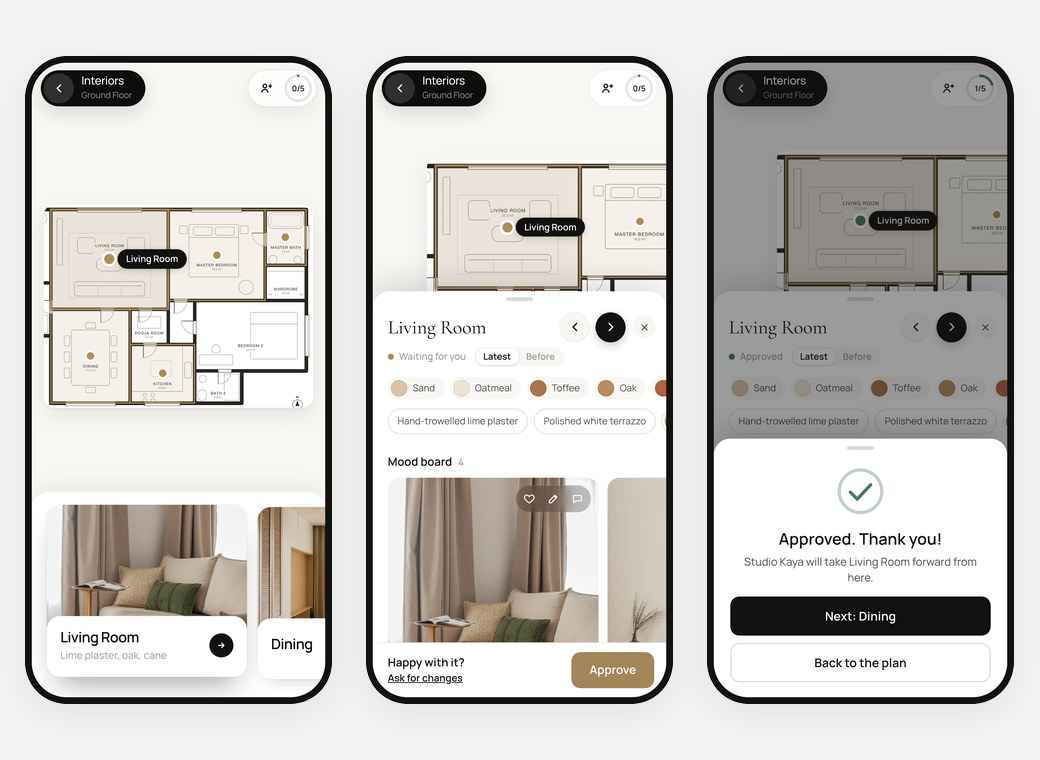
- The plan, as the map: where each room is and how you move through the home.
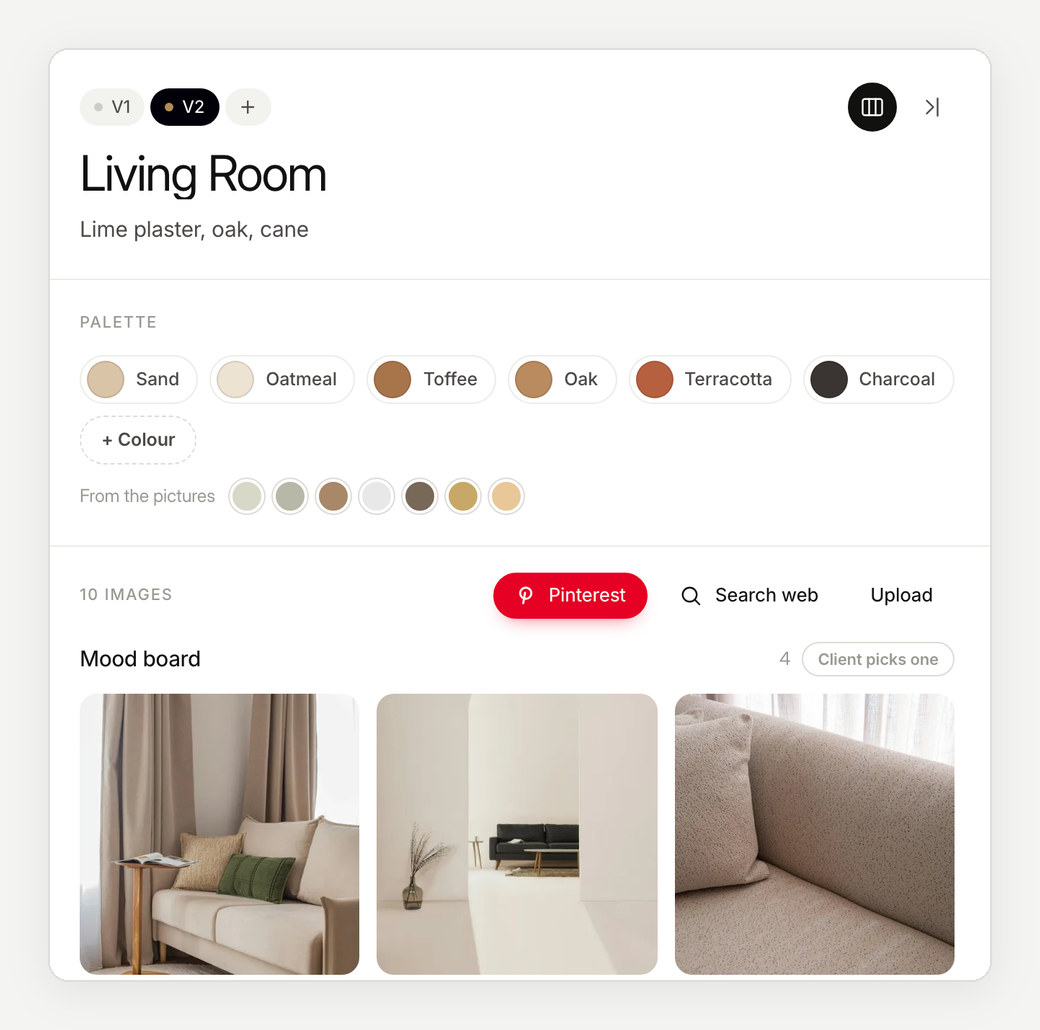
- Room by room: its idea, palette, materials, key pieces and references, in the order the client will live in them.
- What changed, if this is a second round: what they asked for and what you did.
- The decisions you need, and what happens next.
In the room
Start with the plan, not the prettiest render. Clients relax when they know where they are. Show options only where you want a choice, and keep them to two to four: more becomes a mood board, and a client facing ten sofas chooses none.
Let them react before you explain. Note what they love as well as what they question, and write every decision down before you leave the room.
Presenting to a family
When a home is decided together, the person in the meeting is rarely the only one deciding. Parents, grown-up children and relatives abroad all have a say, and the one who wasn't there can undo a decision a week later.
- Ask who decides, early, and make sure each of them sees the design, not a photo of a slide.
- Give everyone the same version. Screenshots forwarded in a group lose their order and their context.
- Let each person react separately, with their own name on what they say, so quieter voices are heard and nobody speaks for anyone else.
- Set a date for decisions, so a room isn't left open while the family discusses it.
Presenting online
For a client in another city or country, share your screen but keep the presentation simple enough to follow on a laptop: one room at a time, large images, little text. Agree the time across time zones, record the call if the client agrees, and send the link straight after so they can walk through it again on their own phone.
What to bring to the meeting
- The presentation on a large screen or tablet, and on your phone as a backup.
- A printed plan, for anyone who thinks better with paper.
- Real samples for the finishes you most need approved: wood, stone, fabric and paint. Colour and texture are decided by touch and daylight.
- A list of the decisions you need today.
After the meeting
Send the presentation the same day, with the decisions in writing: what was approved, what will change, and by when. Keep each version. When the client asks, months later, why the kitchen is green, you can show them the day they approved it.
If your contract includes a set number of revisions, count them per room as you go, so an extra round can be charged or waived openly rather than argued about at the end.
Mistakes that cost decisions
- A 40-page PDF that is too big to open on a phone.
- Feedback scattered across WhatsApp, calls and email, with nobody sure what was agreed.
- Too many options, too late in the project.
- Ending without asking for a decision.
In practice
Enfilade turns your floor plan and mood boards into one design book. The client opens it on any phone, walks the home room by room, hearts what they love, pins a note on what should change and approves each room, with every decision kept with a name and a time. The presentation and a PowerPoint build themselves.
Questions
How many design options should I show a client?
One clear concept per room, with options only where you need a decision: two to four of them. More than that turns a decision into a mood board.
Should I send the presentation before the meeting?
Present first, then send. Walking the client through it lets you tell the story; sending it the same day, with the decisions in writing, keeps the record.
How long should an interior design presentation be?
Long enough to walk through the home once. For a whole home, about an hour usually works; for a single room, half that.
Keep reading
- Practice · 4 min readInterior design mood boards that clients understandHow to build interior design mood boards clients understand: layout tips, material board differences, curation tools, and collecting clear feedback.→
- Practice · 3 min readThe interior design client brief: 40 questions to ask40 essential interior design client brief questions: lifestyle, aesthetics, room requirements, budget, and approval timelines. Free questionnaire.→
- Plans and drawings · 5 min readHow to read a floor planLearn how to read architectural floor plans step by step: understand scale, wall thickness, dimensions, door swings, window symbols, and notations.→