Practice · 3 min read
The interior design client brief: 40 questions to ask
Most problems in a design project start in the brief: a need nobody asked about, a family member nobody met, a budget nobody said out loud. Use these questions in your first meeting, then send back a one-page summary for the client to agree.
How to run the brief meeting
Meet at the client's current home if you can: how people live now tells you more than what they say. Allow one to two hours, take notes or record with permission, and invite everyone who will decide. Afterwards, write a one-page summary of what you heard and ask the client to agree it in writing before you start designing.
The household
- Who will live here, and how old are they?
- Are there pets?
- How often do guests stay, and for how long?
- Does anyone work from home? Where?
- Does anyone need step-free access or other support, now or in the coming years?
- Who will make the final decisions, and who else will have a say?
- Is anyone deciding from another city or country?
How they live
- Walk me through a weekday, from morning to night.
- And a weekend?
- Who cooks, how often, and what kind of cooking?
- How do you entertain: dinners, parties, family gatherings?
- Where do you relax, read or watch television?
- What do you need to store that has no home today?
- What do you love about your current home?
- What frustrates you about it?
Room by room
- Which rooms are in this project?
- What will each room be used for, and by whom?
- What must stay: furniture, art, heirlooms?
- Which room matters most to you?
- Any room you would rather not spend much on?
- Do you need a pooja room, a prayer corner or another space of faith?
- Are there Vastu or other preferences for where rooms or things should face?
Style and feel
- Three words for how you want the home to feel.
- Pictures of spaces you love, and what you love about each.
- Pictures of things you dislike.
- Colours you are drawn to, and colours you avoid.
- Materials you love, or want to avoid?
- Hotels, restaurants or homes that felt right to you?
- How much do you want to see: calm and minimal, or layered and collected?
Budget, time and practicalities
- What budget range do you have in mind, and what does it include?
- Is there a date you need to move in by?
- Will you live there during the work?
- Do you own or rent?
- Are there building or society rules for works?
- Do you already have a contractor or vendors you want to use?
Approvals and communication
- How do you like to see designs: in person, on a call, or to look through in your own time?
- How quickly can you usually give decisions?
- How many rounds of changes do you expect per room?
- Who should we send things to?
- Which channel do you prefer: email, WhatsApp, calls?
The last five questions save the most trouble later: they settle who approves, how, and how many rounds are included, before there is anything to disagree about.
From the brief to the first presentation
Turn the brief into one line per room, then a mood board per room, then a first presentation that quotes the client's own words back to them.
In practice
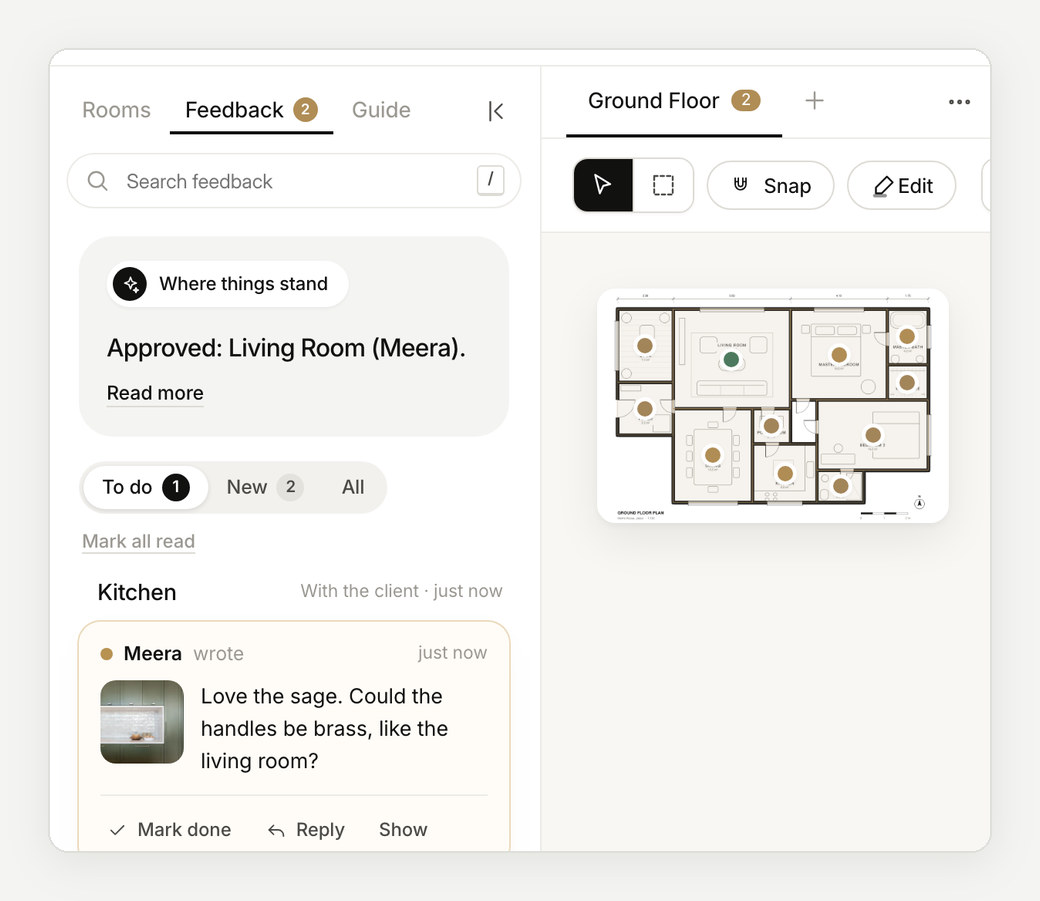
In Enfilade, each room on the plan gets its own board, and the design book you send keeps every reaction and approval with a name and a time, including the family members deciding from abroad.
Questions
What is a client brief in interior design?
A written summary of what the client needs and wants: who lives there, how they live, each room's use, style, budget, time and how decisions will be made, agreed before design starts.
How long should a client brief meeting take?
One to two hours for a whole home. Send a short version of the questions beforehand so the family can think about them together.
Should the client fill in the questionnaire themselves?
Send it ahead as a prompt, but go through it in person. The best answers come from follow-up questions.
Keep reading
- Practice · 4 min readHow to present an interior design concept to a clientHow to structure and deliver an interior design presentation that wins client approvals: room by room, anchored to the floor plan, with zero confusion.→
- Practice · 4 min readInterior design mood boards that clients understandHow to build interior design mood boards clients understand: layout tips, material board differences, curation tools, and collecting clear feedback.→
- Plans and drawings · 5 min readHow to read a floor planLearn how to read architectural floor plans step by step: understand scale, wall thickness, dimensions, door swings, window symbols, and notations.→